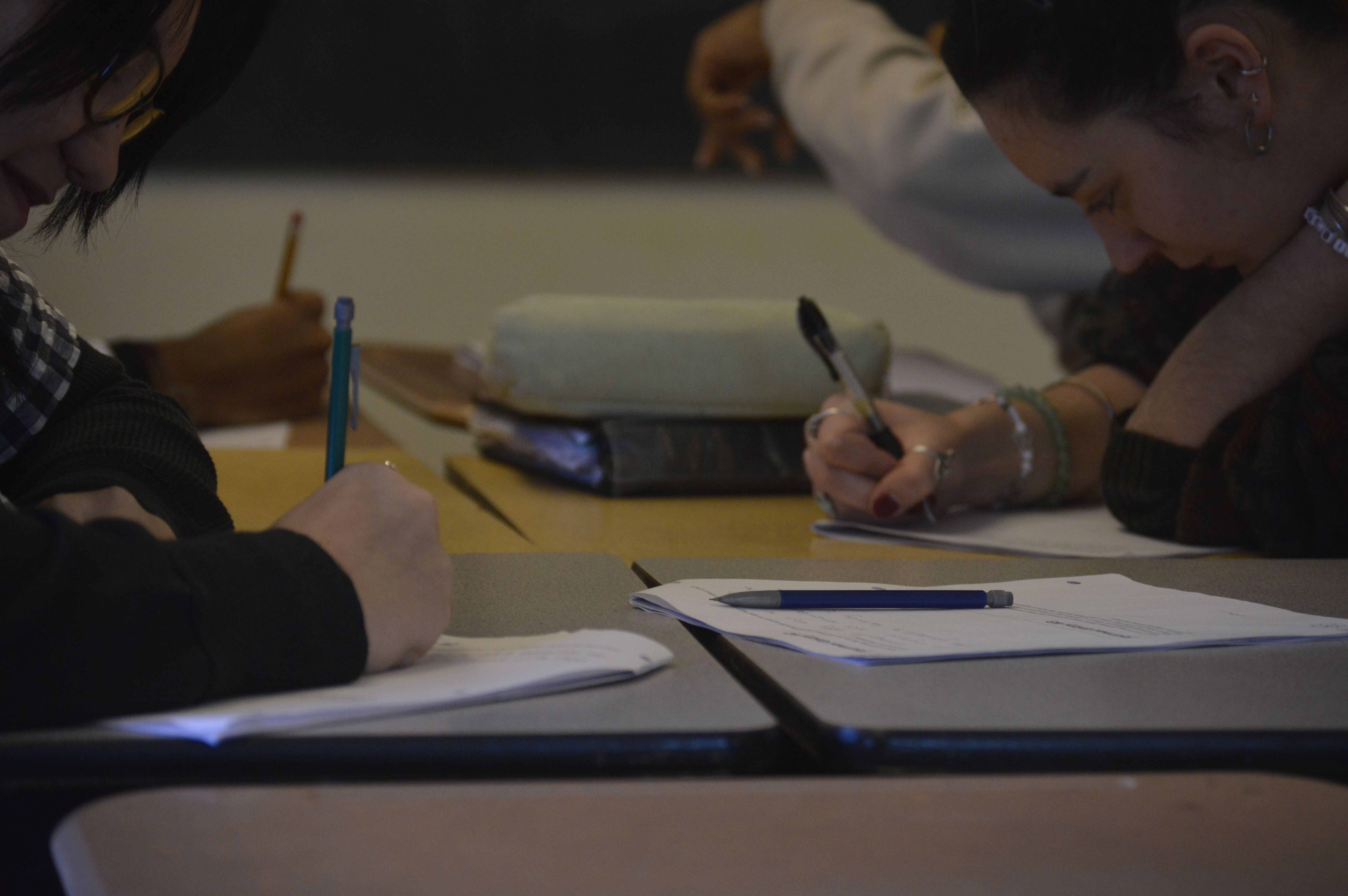
Baltimore School for the Arts (BSA) will follow suit with schools across the district in eliminating most school tutoring this week after the Trump administration backtracked on promises to continue providing pandemic era recovery funding for school systems around the country.
On March 31, the Trump administration said it was reversing a decision to give Maryland schools more time to spend to $418 million in pandemic recovery funds, even though some of the money has already been spent. Baltimore City was the first school district in the country to announce actions to immediately stem the spending.
Tutoring for over 1,100 Baltimore City students at over 25 sites could end this week according to a press release from City Schools. No City School employee will be laid off, since tutoring services are provided by outside vendors.
Myles Denyer, known familiarly to students as “Mr. Myles,” has been working as a tutor at BSA since the beginning of the school year, across a variety of subjects, but primarily in math. He was hired from the company SmartStart Education.
Mr. Myles tutored from 4-5 p.m. on Mondays, as well as the throughout the week with individual or small group sessions during the school day.
His schedule is set to change drastically: After Spring Break, Mr. Myles will only tutor after school on Monday and on one full day per week instead of four full days per week.
In the past, Denyer was tutoring 34 students throughout the week. But with his new, much more limited schedule, Mr. Myles will now only be able to tutor just 8 students according to Thomas Askey, assistant principal of BSA.
Askey named several strategies that the school would try and implement moving forward, such as including three students in a tutoring session instead of one, or encouraging more students to come to the after-school tutoring sessions with student tutors from the National Honor Society, who volunteer their time.
“It feels like a gut punch,” Askey said about the Trump administration’s decision. “People who are boots on the ground in an educational situation are being tossed around like political footballs.”
Many students at Monday’s tutoring session expressed dismay over the change of events.
Winter Smith, a sophomore in Stage Design and Production, said that Myles’s tutoring was “very helpful” and that the change means “…I will have a worse understanding of whatever I’m learning, because that day I took his tutoring helped me grasp the concept.”
Isaiah Woolford, a freshman in the Music Department, stated, “I feel it [school-provided tutoring] is very helpful because a lot of times people don’t get help at home or don’t have time to get all the work done.” Woolford called the end of most after school tutoring in the district “so tragic.”
Other students were less worried. Lauryn Burks, a senior in the Music Department and tutor for the National Honor Society, said, “I believe with all the students we have helping out from NHS tutoring, and coach classes from teachers, we’ll be able to come back from this.”
Nonetheless, research has shown that tutoring was one of the most effective methods of closing educational gaps after the pandemic. City Schools invested heavily in tutoring, and school officials believe that it achieved positive results.
Baltimore was one of the few urban school districts in the country last year to report higher test scores in reading than before the pandemic. Askey stated about the situation, “It’s just so frustrating.”
The loss of funding from the federal government will have major consequences in what programs Baltimore City Public Schools will be able to keep running. This change to tutoring will have a large impact on how students get help.
To contact this writer, email Muse Newspaper at musebsa@bsfa.org.
Featured photo by Hassan Hunt for The Muse.